If your company already has a sourcing team, internal QC staff or an inspection partner in Vietnam, do you really need another inspection company?
Sometimes, the answer is no.
If your existing team has the capacity, product knowledge and independence required for a particular shipment, adding another inspection layer may create little value.
But some situations are different.
The better question is not:
“Do we already have QC?”
It is:
“Who should verify this particular shipment?”
Independent buyer-side QC can provide additional support for one specific PO, supplier or shipment without replacing the buyer’s existing quality system.
1. A Supplier Says the Defects Have Been Corrected
A previous inspection identified defects. The factory reports that corrective actions are complete and asks the buyer to release the shipment.
The buyer may not need another full inspection. Instead, a focused re-inspection can verify whether the previously reported problems were actually corrected.
For furniture, this may include:
- Surface finish or colour variation
- Loose or incorrectly installed hardware
- Incorrect dimensions
- Unstable assembly
- Upholstery workmanship
- Mechanisms and functions
- Packaging or labeling corrections
The objective is simple:
Verify the corrective action before shipment release.
Instead of relying only on the supplier’s confirmation, the buyer receives new onsite evidence.
2. Your Existing QC Team Is Fully Booked
Production schedules do not always follow the original plan.
Several suppliers may become ready for inspection on the same day. A factory may finish late. A shipment may suddenly move forward. An urgent re-inspection may be required while the buyer’s inspectors are already working elsewhere.
Hiring permanent local staff to solve occasional scheduling conflicts may not make economic sense.
An independent QC company can provide temporary field capacity for one assignment.
The buyer still controls:
- Product specifications
- Inspection checklist
- Sampling requirements
- Acceptance criteria
- Required tests
- Reporting requirements
- Final shipment decision
The independent inspector simply executes the agreed scope onsite.
3. The Factory and QC Team Disagree About a Defect
Not every quality issue is clear-cut.
A supplier may consider a defect acceptable while the buyer’s QC team considers it outside the approved standard.
The disagreement may involve colour or finish variation, workmanship, dimensions, cosmetic defects, assembly, product stability, packaging or interpretation of an approved sample.
In these situations, an independent inspection can provide another documented set of observations.
The inspector’s role is not to decide the commercial dispute.
The role is to inspect, measure, photograph and report what is actually observed against the agreed requirements.
The buyer then makes the final decision.
4. A New Supplier Is Shipping the First Production Order
A good development sample does not automatically guarantee consistent mass production.
The first commercial order often reveals how well a supplier controls materials, workmanship consistency, dimensions, assembly, components, functions, labeling and export packaging.
Consider a dining-table order. The quantity may be correct, while sampled units still show inconsistent stain colour, loose hardware, incorrect dimensions or assembly problems.
For upholstered furniture, risks may involve stitching, wrinkles, appearance, mechanisms, accessories or protective packaging.
An additional buyer-side inspection provides more visibility before the first shipment leaves Vietnam.
5. You Need Someone at the Factory — Not Another Permanent Employee
Many international sourcing and merchandising teams can manage suppliers effectively from overseas.
The problem appears when one specific issue requires somebody physically present at the factory.
Flying a buyer, sourcing manager or product-development specialist to Vietnam for a single factory visit may not be efficient.
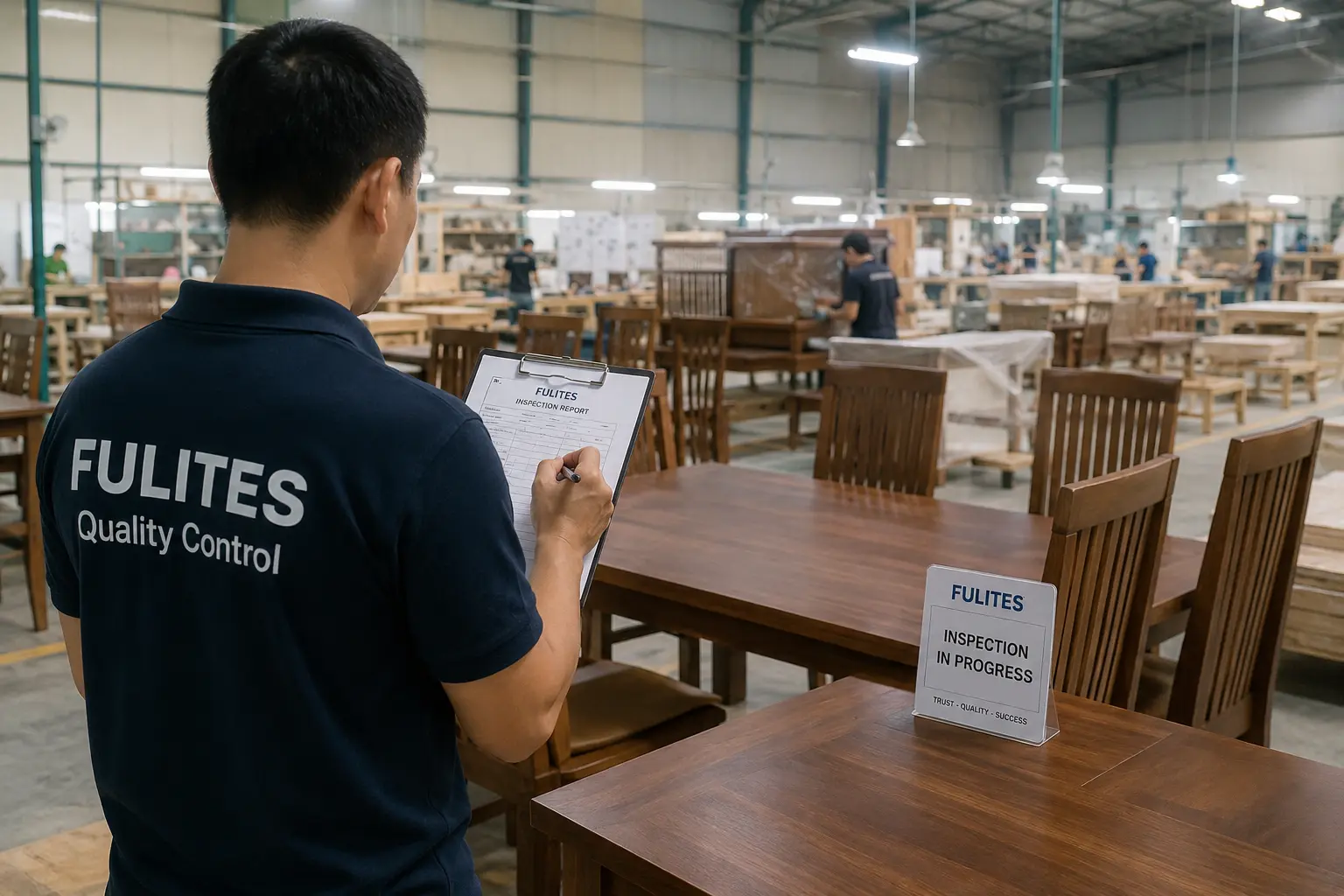
An independent local inspection team can perform a clearly defined assignment and provide documented onsite findings.
Typical cases include:
- Corrective-action verification
- Short-notice factory visits
- Production-status checks
- Product measurements
- Packaging verification
- Workmanship checks
- Photographic evidence
- Shipment exceptions
Sometimes the buyer does not need another permanent QC employee.
The buyer simply needs reliable boots on the ground for one specific problem.
6. The Products Passed PSI — But Loading Still Needs Verification
Product acceptance and shipment verification are two different control points.
A Pre-Shipment Inspection can verify product quality, workmanship, dimensions, functions, quantity and packaging before release.
But the buyer may still want visibility during container loading:
- Is the correct quantity being loaded?
- Are the approved cartons entering the container?
- Is the container visibly suitable for loading?
- Are cartons handled appropriately?
- What container and seal numbers were used?
This is where Container Loading Supervision may complement PSI.
PSI asks: “Are the products acceptable?”
CLS asks: “Were the correct goods loaded and documented as required?”
For a detailed comparison, see our guide: Pre-Shipment Inspection vs Container Loading Supervision in Vietnam.
When You Probably Do Not Need Another Inspector
More inspection is not automatically better.
If your existing QC team can visit the factory on schedule, understands the product, has sufficient independence and already provides the evidence required for shipment approval, another inspection may simply add cost.
Independent QC should solve a specific problem.
A risk-based approach is more practical: use additional inspection capacity when the shipment, supplier or situation justifies it.
Independent QC Should Complement Your Existing System
FULITES does not need to replace the buyer’s internal QC team or existing inspection partner.
The cooperation can be much simpler:
ONE PO.
ONE FACTORY.
ONE DEFINED SCOPE.
ONE INDEPENDENT REPORT.
FULITES can support buyers as:
Independent verification — when another set of onsite evidence is required.
Backup capacity — when the normal QC team is unavailable or fully booked.
Re-inspection support — when corrective actions need to be verified.
Shipment-exception support — when one supplier, PO or shipment requires additional attention.
The inspection can follow the buyer’s existing specifications, approved samples, drawings, checklists, sampling requirements and acceptance criteria.
You can also review a sample inspection report to understand how inspection findings can be documented.
What Information Is Needed to Review One Inspection?
To review a potential assignment, please provide:
- Product / SKU
- Factory location
- Order quantity
- Current production or packing status
- Target inspection date
- Product specifications, drawings or approved sample information
- Buyer checklist or required tests, if available
FULITES can then review the requirement and propose an appropriate inspection scope and written quotation.
Start With One Real Shipment
You do not need to outsource an entire QC program.
Start with one real case.
ONE PO. ONE FACTORY. ONE INSPECTION SCOPE.
If you currently have a Vietnam order that needs an independent check before shipment, send us:
Product + Factory Location + Target Inspection Date
FULITES
Independent Buyer-Side Quality Control in Vietnam
Email: info@fulites.com
WhatsApp: +84 90 803 5356
www.fulites.com
Inspection findings reflect the conditions observed within the agreed inspection scope and sampled units at the time of inspection. The buyer remains responsible for the final shipment decision.